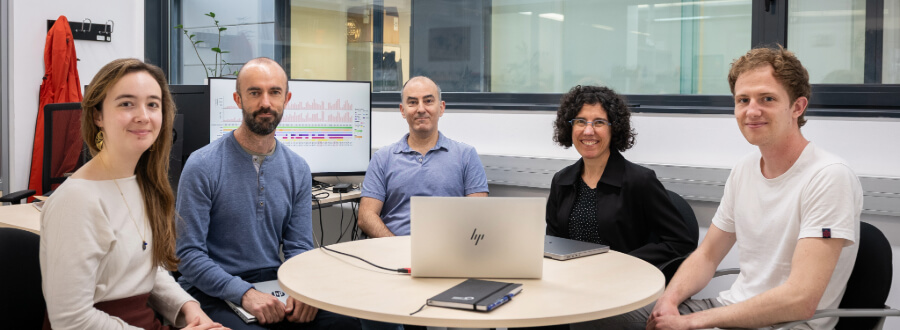
A study by IRB Barcelona links tobacco and biological sex to the risk of developing bladder cancer
A study led by researchers from the Institute for Research in Biomedicine of Barcelona (IRB Barcelona), based at the Barcelona Science Park, and conducted in collaboration with the University of Washington, shows that tobacco and biological sex determine how certain mutated cells expand in the healthy bladder tissue. The novel approach used in this study allows for the detection of a significantly higher number of mutations than was previously possible. The results, published in the journal Nature, could help explain why men and smokers have a higher risk of developing bladder cancer and open the door to the development of new tools for bladder cancer prevention and early detection.
Bladder cancer is one of the most common cancers worldwide. Men are approximately four times more likely to develop it than women, and tobacco is the main known environmental risk factor. However, the biological mechanisms underlying these differences are still unclear. Since cancer can take decades to develop, studying healthy tissue is essential to understand the early stages of the disease and, in turn, improve risk prediction, prevention, and early diagnosis.
A research team led by Dr. Núria López-Bigas and Dr. Abel González-Pérez at IRB Barcelona, together with Dr. Rosana Risques at the University of Washington, has shown that tobacco and biological sex influence how normal cells in healthy bladder tissue evolve, promoting the expansion of certain mutated cells that could play a key role in cancer development. The study provides new insights into why men and smokers, in general, have a higher risk of developing this disease.
The research was carried out in part within the PROMINENT project, which is conducted as part of the prestigious Cancer Grand Challenges initiative, supported by the Spanish Association Against Cancer.
“Throughout life, healthy tissues accumulate many mutations, but what matters is not only how many there are, but which ones manage to expand and form clones—copies of the same cell that share the same mutations,” explains Dr. López-Bigas, ICREA researcher and head of the Biomedical Genomics Laboratory at IRB Barcelona. “We have observed that tobacco and biological sex directly influence this process”.
Biological sex and tobacco shape healthy bladder tissue
The researchers observed clear differences in the clonal architecture of bladder tissue between men and women. In male donors, certain mutations in cancer-related genes showed an evolutionary advantage, meaning that the clones carrying them tended to expand even in healthy tissue.
A notable effect of tobacco was also observed. Among donors over 55 years old, those who had smoked showed a high frequency of mutations in the promoter of the TERT gene, a DNA element that reactivates telomerase and allows cells to evade ageing and continue dividing. More importantly, the study provides evidence that tobacco not only acts as a mutagen—causing new mutations—but also as a clonal promoter, meaning it facilitates the expansion of cells with pre-existing mutations.
This is the first time these effects have been observed directly in healthy bladder tissue rather than in tumours, providing new insights into the earliest stages of cancer development.
New insights into cancer risk and prevention: implications
By showing that differences in mutation expansion are already present in healthy tissue, the study proposes a new way of understanding tissue evolution and provides clues about its malignant transformation. This shift in focus—from simply counting mutations to identifying which ones thrive—could help explain why men and smokers are more likely to develop bladder cancer.
The findings also open the door to future applications. For example, measuring expanding clones in the bladder could contribute to the development of risk prediction and early detection tools through urinalysis. More broadly, this approach could be applied to other tissues and exposures—such as occupational chemicals or chemotherapy treatments—opening new avenues for cancer prevention.
“This study is just the tip of the iceberg. We analysed 16 genes in the bladders of 45 individuals and found significant differences. The same strategy can be applied to other tissues and risk factors,” adds Dr. González-Pérez, associate researcher at IRB Barcelona.
Ferriol Calvet and Raquel Blanco, PhD students at the Biomedical Genomics Laboratory of IRB Barcelona, are the first authors of the study.
» Article of reference: Sex and smoking bias in the selection of somatic mutations in human bladder. Ferriol Calvet, Raquel Blanco Martinez-Illescas, Ferran Muiños, Maria Tretiakova, Elena S. Latorre-Esteves, Jeanne Fredrickson, Maria Andrianova, Stefano Pellegrini, Axel Rosendahl Huber, Joan Enric Ramis-Zaldivar, Shuyi Charlotte An, Elana Thieme, Brendan F. Kohrn, Miguel Grau, Abel Gonzalez-Perez, Nuria Lopez-Bigas, Rosa Ana Risques. Nature (2025) doi: 10.1038/s41586-025-09521-x