Researchers at IRB Barcelona identify a new strategy to fight obesity through the activation of brown adipose tissue
A new study from the Institute for Research in Biomedicine (IRB Barcelona), located at the Barcelona Science Park, indicates that it is possible to treat obesity without the need to reduce food intake. The work, published in the journal Nature Communications, reveals that Neuritin 1, a protein produced by brown adipose tissue, protects against obesity, insulin resistance, and liver inflammation in animal models.
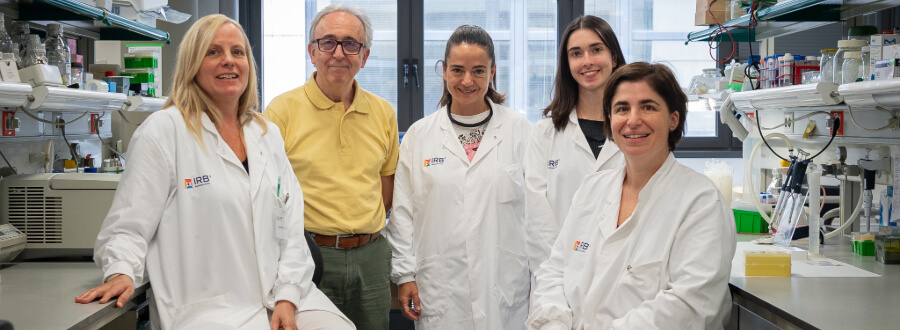
The study, co-led by Dr. Antonio Zorzano and Dr. Manuela Sánchez-Feutrie, explains that Neuritin 1 produced in brown adipose tissue acts as a powerful activator of energy expenditure, helping to protect against obesity and other metabolic diseases.
Unlike current anti-obesity and antidiabetic drugs, such as Ozempic or tirzepatide, which work by suppressing appetite, Neuritin 1 boosts energy burning without affecting food intake. “By increasing the levels of Neuritin 1 specifically in brown fat, we observed that the animals burned more energy, which helped prevent fat accumulation,” explains Dr. Zorzano, who is also a professor at the University of Barcelona and a researcher at CIBERDEM.
This metabolic boost led to significant improvements in several health indicators, including reduced weight gain, improved insulin sensitivity, and lower liver inflammation, even in animals fed high-calorie diets.
Neuritin 1: a new player in energy metabolism
Previously described for its role in neuronal plasticity, Neuritin 1 is now shown to have a metabolic function in brown fat, a type of fat specialised in generating heat through a process known as thermogenesis. This process involves burning energy to maintain body temperature, particularly in response to cold. In this context, Neuritin 1 stimulates mitochondrial activity and promotes the expression of thermogenic genes.
To trigger its expression, the researchers used a viral vector that drives Neuritin 1 overexpression exclusively in thermogenic fat cells. The result was a sustained increase in metabolic activity, without affecting food consumption or physical activity in the animals.
“These findings point to Neuritin 1 as a promising therapeutic candidate for treating obesity and its associated conditions, such as type 2 diabetes and fatty liver disease, through a mechanism that differs from current approaches,” highlights Dr. Sánchez-Feutrie.
Relevance to human health
Beyond the animal model results, genetic data in humans also show a correlation between Neuritin 1 and susceptibility to obesity, reinforcing the potential relevance of the discovery. The team is currently exploring ways to translate these findings into a future therapeutic strategy.
The study was made possible thanks to the contributions of several IRB Barcelona core facilities, including Bioinformatics and Biostatistics, Functional Genomics, Protein Expression, and Histopathology. It also involved collaborators from international institutions such as the CNRS (France), Karolinska Institutet (Sweden), and the University of Houston (USA).
» Article of reference: Identification of Neuritin 1 as a local metabolic regulator of brown adipose tissue. Manuela Sánchez-Feutrie, Montserrat Romero, Sónia R. Veiga, Núria Borràs-Ferré, Nick Berrow, Martina Ràfols, Noemí Giménez, Andrea Rodgers-Furones, Alba Sabaté-Pérez, Angela Rodríguez, Luis Rodrigo Cataldo, Hans Burghardt, David Sebastián, Natàlia Plana, Vanessa Hernández, Laura Isabel Alcaide, Óscar Reina, Maria J. Monte, José Juan G. Marin, Manuel Palacín, Remy Burcelin, Per Antonson, Jan-Ake Gustafsson, Antonio Zorzano. Nature Communications (2025). doi: 10.1038/s41467-025-62255-2
» Link to the news: IRB Barcelona website [+]