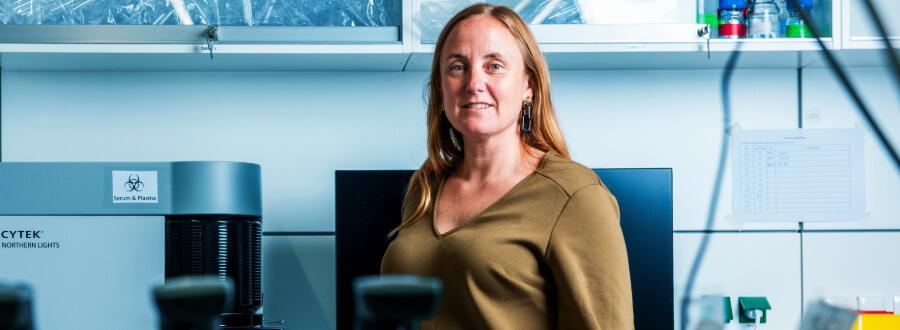
Valerie Vanhooren, CEO and co-founder of ONA Therapeutics: “Being an entrepreneur is one of the most rewarding – yet most challenging – journeys you can embark on”
From an early age, she was driven by a desire to improve people’s lives and recognised that science was the most effective path to achieve this goal. While her passion for biology remained strong, she soon developed a deep interest in the business world. She describes entrepreneurship as both extraordinarily rewarding and exceptionally challenging. As CEO of Ona Therapeutics, her primary mission is to develop transformative therapies that significantly improve the lives of patients battling advanced cancer.
You have been featured in a recent article of Bloomberg on how Spain has become big pharma’s hotspot in Europe for life sciences. Is Barcelona truly the place to be?
It’s a very positive development, because building a strong and dynamic ecosystem is essential for sustained growth. We are seeing an increasing number of biotech companies emerging, alongside a growing pharmaceutical presence. Both sectors thrive on cross-fertilization and collaboration, which is fantastic for attracting and retaining talent, as it creates a wealth of new professional opportunities. Pharmaceutical companies are drawn here for the same reasons as biotech: the proximity to top hospitals and world-class research centers. Spain now leads Europe in clinical trials and ranks fourth globally—behind only Japan, China, and the United States—which is a tremendous achievement. For pharma, being close to these institutions offers a major strategic advantage. Additionally, there’s significant room for growth, operating costs are relatively lower compared to other major hubs, and there is a deep pool of highly skilled, motivated talent. At the center of this vibrant ecosystem is Barcelona, truly making it one of the most exciting places to be in life sciences today.
Your research and development efforts focus on metastasis, the advanced stage of cancer responsible for most of deaths. What led you to concentrate on this stage of the disease?
Many primary tumors can be surgically removed, and multiple therapies are available that can even cure a significant number of these patients. However, when a tumor spreads to other parts of the body, the cancer cells undergo changes compared to those in the original tumor, and the disease acquires new characteristics. To survive in these new environments and evade detection by the immune system, the cancer cells alter their biological state. This transformation is one of the reasons why advanced cancers often respond poorly to therapies developed for primary tumors.
Our goal is to develop treatments specifically designed for these advanced stages, helping patients live longer even if the disease cannot be fully eliminated. This approach is similar to the management of HIV, where ongoing treatment enables people to live normal lives without achieving a complete cure. Our mission is to create therapies that specifically target advanced tumors, aiming to significantly extend patients’ lives.
Are some metastases more difficult to treat than others? Does this mean that in case of metastases it is also more aggressive?
Our focus is on breast, gastric, colon, and liver cancers. Based on preclinical studies and analyses of patient biopsies from these cancer types, we observe a significant overexpression of our target. This suggests that our drug will be particularly effective in these indications. In general, metastatic disease often reflects a more aggressive form of cancer, as the cells have adapted to survive in new environments and evade the immune system. Some metastases are indeed more difficult to treat than others, depending on factors such as the organ they colonize, their biological characteristics, and their level of resistance to existing therapies. Our strategy is specifically designed to address these challenges by targeting the unique biology of advanced tumors.
And how does your drug work to achieve that?
Our main target is highly overexpressed in the tumor cells of breast, gastric, colon, and liver cancers. These cancer cells rely on this overexpression to activate survival mechanisms necessary for their continued growth. We are developing antibody-drug conjugates (ADCs), which represent the third generation of cancer therapies. The first generation in oncology consisted of small molecules, such as chemotherapy agents, which, while effective, are non-specific and damage both cancerous and healthy cells. The second generation introduced monoclonal antibodies that specifically target tumor cells and block certain protein functions; however, over time, tumors can adapt and develop resistance.
Our approach combines the strengths of both strategies. ADCs use an antibody that specifically targets the tumor, carrying with it a chemical payload. This allows the antibody to home in on the tumor, block critical survival signals, and deliver a potent chemotherapeutic agent directly to the cancer cells. By doing so, we enhance the effectiveness of chemotherapy while significantly reducing toxicity to healthy tissues.
What about prevention? There is increasing evidence of the influence of lifestyle and environment on the onset of cancer. Does this mean that pharmacological prevention efforts are pointless?
Prevention and early diagnosis are absolutely complementary. Ideally, I would love for my work to become obsolete — for a world without advanced cancer. However, realistically, I don’t believe that will happen in the near future. We should certainly invest more in diagnostics, and people should be encouraged to undergo regular screenings. One of the challenges is that diagnostics are not always highly profitable for the pharmaceutical industry, which tends to prioritize areas with greater financial returns. Yet diagnostics can have an enormous impact. For example, in colon cancer, something as simple as an annual stool blood test — costing around one euro — could make a huge difference in early detection.
Regarding prevention, many lifestyle and environmental factors can indeed be managed. Smoking, for instance, significantly increases the risk of many types of cancer. Exercise also plays a protective role, and diet is believed to have an influence, although research is still evolving in that area. However, lifestyle is only part of the equation. Genetics also plays a critical role. Some individuals have a higher risk due to inherited genetic mutations, and unfortunately, we still do not fully understand the complex interplay of genetic factors. For people with a family history of cancer, extra vigilance and regular check-ups are particularly important.
Which are your next big milestones for the company? When are you planning to reach clinic phase?
We are advancing two antibody-drug conjugates (ADCs) in our pipeline. ONA-255 is being developed for breast and gastric cancers, while ONA-389 is focused on colon and liver cancers. ONA-255 is expected to enter clinical studies by the end of this year. For ONA-389, we are preparing to initiate IND-enabling studies shortly, with the goal of reaching First-in-Human (FIH) trials approximately one year after ONA-255. Our first clinical trial, Phase 1A, will be conducted at five sites across Spain, including two centers in Barcelona — Vall d’Hebron and Hospital Clínic. As we advance into Phase 1B and Phase 2, we plan to expand our clinical footprint across Europe.
Currently you are the CEO of the company but, was it something you had in mind? Do you think that nowadays there are more scientists with a business mindset?
It all happened quite naturally. From a young age, I knew I wanted to work in the pharmaceutical field and make a real difference in patients’ lives. I believed that if I did my job well, I might be able to positively impact even just one person’s life — and that was enough motivation. Initially, I envisioned myself leading a research group in academia, but over time I realized that path had limited real-world application. While I believe academic research is absolutely fundamental, I was increasingly drawn to translational science and the business side of innovation — areas where strategy and negotiation play a key role. During my PhD, I came to understand that I wasn’t meant to be a pure scientist. I transitioned into a project leader role within the pharmaceutical industry, where you need to deeply understand science but also manage projects almost like a mini-CEO. Becoming a CEO felt like a natural next step — a much bigger challenge, certainly, but one that I had been unconsciously preparing for throughout my entire career.
This year you announced the incorporation of new members in your management team, one of them is Dr. Aleix Prat, from Hospital Clínic. What are the plans of the company with his incorporation to the team?
Aleix has been instrumental to our work — in fact, he has been collaborating with us for over two years. He is actually the one who first discovered the target of our drug. It was a true symbiosis: as a clinician, Aleix identified a major unmet need in breast cancer, where patients had very few treatment options. Through extensive research on tumor samples, and in collaboration with Dr. Roger Gomis from IRB, he found this target to be significantly upregulated and recognized its potential as a therapeutic opportunity. However, he needed support to translate this discovery into a viable drug — and that’s when we connected. Since then, we have been working closely together. I believe it is absolutely critical in early-stage drug development to engage with clinicians from the start. They help answer fundamental questions: Does this drug make sense? Is there a real unmet need? Will it truly benefit patients? Aleix played a key role in shaping that understanding for us. Today, he chairs our advisory board, and his involvement is invaluable. Having a clinician of his expertise not only strengthens our scientific and strategic approach, but also helps foster connections with the broader clinical community to support future development and adoption of our therapies.
Choosing to be a woman scientist and entrepreneur seems like a difficult path. What have you learned on your journey and what advice would you give to other women?
First, I want to emphasize that being an entrepreneur — whether you are a man or a woman — is incredibly challenging. It’s one of the most exciting and rewarding paths you can take, but it also demands resilience. Some days bring positive breakthroughs, and the very next day can bring unexpected setbacks. It’s truly an emotional rollercoaster. However, if you have a strong team around you, you can overcome those challenges and keep moving forward. One important lesson I’ve learned — especially relevant for women — is the importance of confidence. People can easily sense when you lack it; they can perceive insecurity right away. Too often, we tend to think that others are more capable or more knowledgeable, but that’s simply not true. My advice is to be confident, trust your abilities, and remain open to learning. Don’t be afraid to admit when you don’t know something — but be proactive and committed to finding the answers. Confidence and a willingness to grow are key to success.